
Ashley Chandler
Community Newspapers, Inc.
Nassau County Emergency Management Director Tim Cooper said EM may lose federal and state government funding.
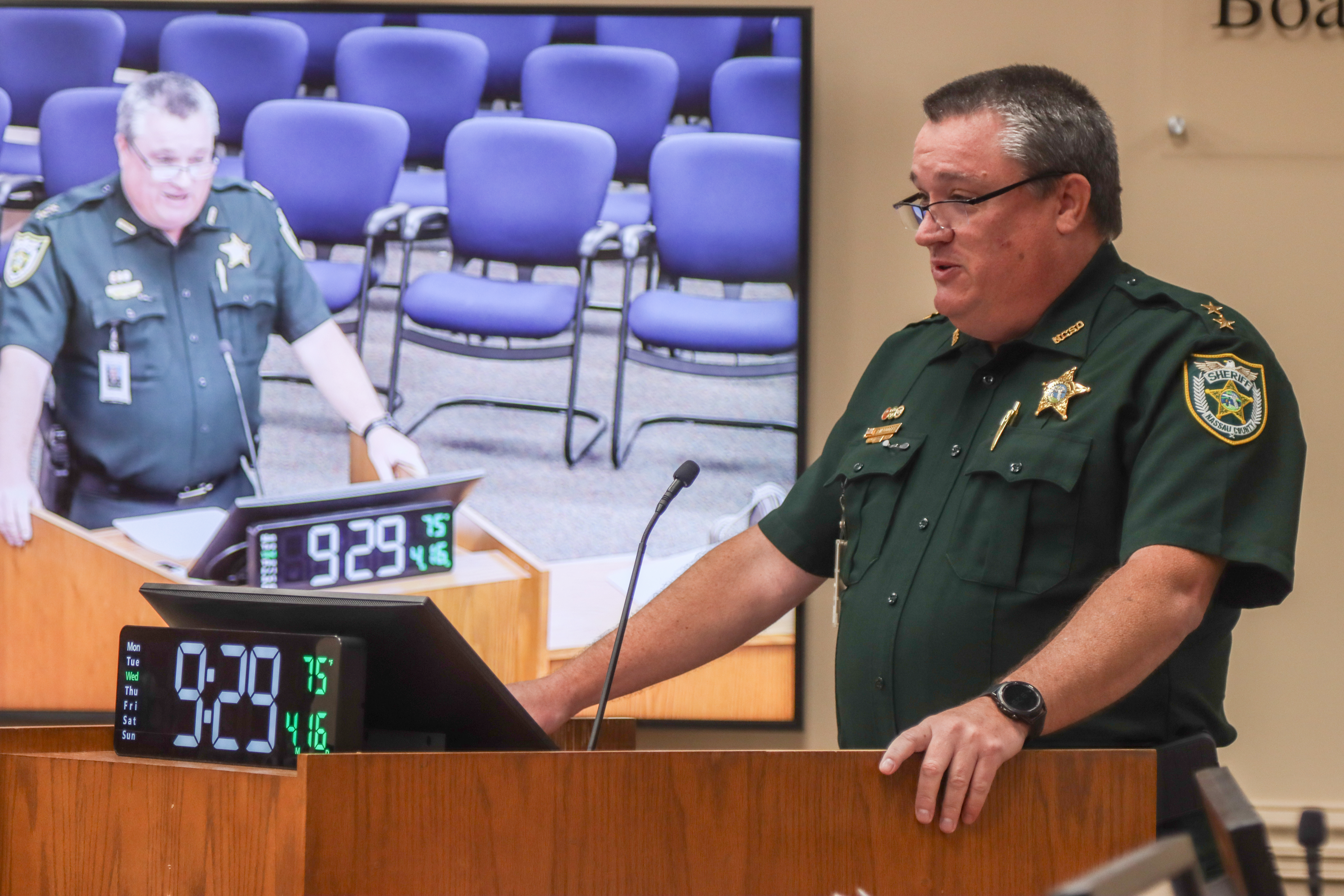
Cooper gave an annual update to the Board of County Commissioners April 16.
“With changes at the federal level, we just don’t know what it’s going to look like when the rubber meets the road,” Cooper said.
The last estimates provided by the Florida Division of Emergency Management, according to Cooper, show they’re anticipating $780 million to be cut, mostly in recovery funds.
“That has real impacts on our people in this county,” Cooper said.
He added, “We have two grants that support emergency management and those grants are up to be cut. They’ve told us that the (EM Preparedness and Assistance Grant) is likely going to stay, and the (EM Performance Grant) is likely gone. The other one is going to diminish over the years.”
Cooper said it is necessary to prepare for the effects that will come locally. He said this could mean coordinating with partners and potentially having emergency preparedness divisions for local organizations in case external support is gone.
“We have to build out more than just Emergency Management if we’re going to lose these overhead resources,” he said.
Although financial assistance outlooks seem grim, local preparedness gives Nassau County a leg up.
“We have increased our local EM training by roughly three-fold externally,” Cooper said. “That has mostly been with county staff, we’ve organized with them. We’ve all taken the basic level of EM training.”
Cooper said a recent training series saw 100% attendance by Nassau County staff.
“We have successfully engaged our community by providing local classes, and increased our social media following by nearly 70%,” Cooper said. “Internally all staff members have successfully completed the Federal Emergency Management Agency’s Professional Development Series, and I’m proud to announce that we now have two people that have completed the Advanced Professional Development Series.”
Emergency Management is responsible for managing local hazards and risks; planning and preparing for disasters; identifying strategies to get damages and losses; and coordinating and managing resources in an emergency.
“The good thing is, we do a pretty good job at that,” Cooper said.